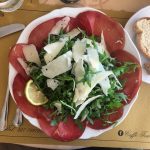
When a student in a cooking class vows to make a certain dish that very night, it’s the ultimate compliment. There were several enthusiastic promises along those lines when I demonstrated a classic salad consisting of thinly sliced bresaola topped with a heap of arugula and shaved Parmigiano Reggiano cheese.
Everyone assembled their own salad, seasoning it with olive oil, vinegar, salt and pepper passed at the table.
The fact that you can make the salad in three minutes flat probably had something to do with its popularity. Also the fact that bresaola, an air-cured beef from northern Italy, is new to many people.
I ate a perfect version of this salad in a casual outdoor cafe overlooking Roman ruins in Fiesole. Supple slices of bresaola, tangy arugula, paper-thin slices of cheese so tender it crumbles under its own weight. It’s easy to bring these flavors back home. Just make sure the ingredients are the best and this salad will deliver, every time.
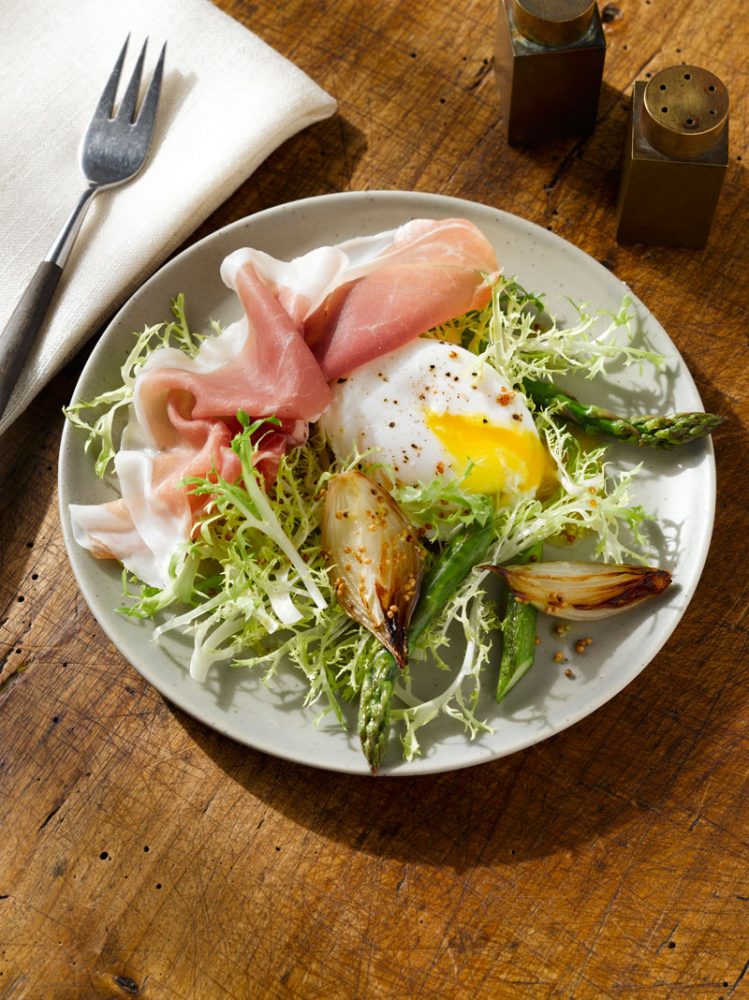
Here’s a deli salad with prosciutto di Parma that dishes up like a dream: frisee dressed with a mustard vinaigrette, with the prosciutto draped along the side and a poached egg tucked in the middle.
Sometimes it’s great to mix up all the good flavors normally displayed separately on an antipasto platter. That’s what happens in a chopped salad I like to make with cubed Genoa salami, mozzarella, black olives, pickled Italian peppers, chickpeas and chopped romaine or escarole–good things from the deli case plus a few fresh ingredients (recipe below).
What a flavor pay-off, with minimal effort!
- 3 ounces thinly sliced Bresaola air-cured beef
- 4 ounces arugula or mixed micro greens
- 12 grape or cherry tomatoes
- 8 oil-cured olives optional
- 2 lemon wedges
- Extra virgin olive oil
- Balsamic vinegar or white wine vinegar
- Sea salt
- Freshly ground black pepper
-
Arrange Bresaola slices on two plates. Lightly top each with arugula. Place tomatoes and olives (if using) around edges. Garnish with lemon wedges.
-
Pass olive oil, vinegar, salt and pepper at the table.

Try this salad: crisp greens tossed with good things from the deli case. The recipe is from PIATTO UNICO, by Toni Lydecker. (Wrong photo: Sorry, can't seem to remove from the recipe template!)
- ¼ cup extra virgin olive oil plus more to taste
- 2 tablespoons red or white wine vinegar
- ¼ cup snipped basil dill, chives or parsley leaves
- Sea salt or kosher salt
- Freshly ground black pepper
- 1 cup fresh mozzarella cubes or halved bocconcini about 5 ounces
- 2 to 3 ounces thick-cut Genoa salami cut in small cubes
- 1 can chickpeas (19 ounces), drained and rinsed
- 8 black oil-cured olives pitted
- 2 or 3 pickled Italian peppers
- 3 cups shredded crisp greens such as romaine escarole, or a mixture
-
Whisk together the olive oil, vinegar, basil, ½ teaspoon salt, and ¼ teaspoon pepper in a bowl large enough to hold the salad. Add the mozzarella, salami, chickpeas, olives and peppers; stir until coated with the dressing. Place the greens on top. (At this point the salad can be refrigerated for several hours.)
-
Toss the greens with the ingredients at the bottom of the bowl. Taste and add more olive oil, vinegar, salt or pepper if needed.
Note: This salad can be varied in keeping with deli ingredients you might have on hand or want to try. For example, thin strips of mortadella and small cubes of semi-soft Asiago or provolone could be substituted for the salami and mozzarella. Marinated artichokes or mushrooms could stand in for the peperoncini.

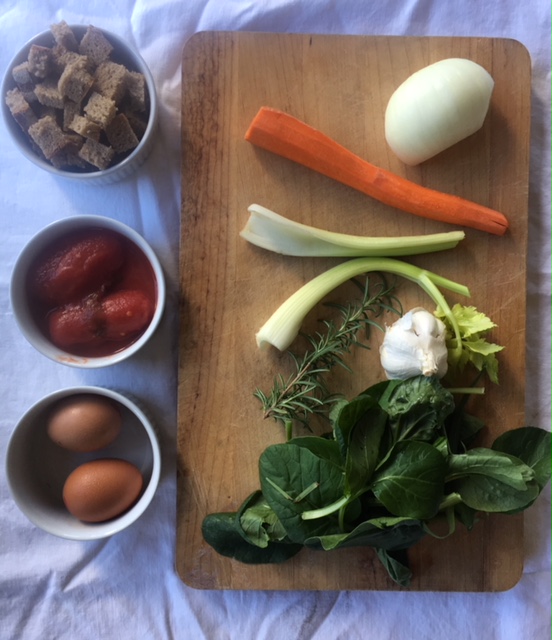 No need for brodo! Vegetables, including onion and some kind of greens, create their own broth. Each serving, as it’s dished up, is enriched by adding bread, grated hard cheese and, most important, an egg poached in the soup itself.

 Buckwheat has long been grown here, turning up in whole-grain breads and steaming bowls of whole-grain polenta taragna. So why not pasta? Italy takes pride of ownership and I was interested but not surprised to find a site by a group called


 Leaving black-eyed peas out didn’t feel right, though. And why should I? Italians were introduced a few centuries back to fagioli dall’ occhio, along with other New World ingredients, and they’re widely available.
 Nobody needs more than one recipe for eggplant parmesan, any more than you need multiple methods for perfect scrambled eggs or a perfect grilled cheese sandwich.
 Pickling isn’t just for cucumbers anymore. It’s a huge trend, whether taking the form of traditional mixes like Italian giardiniera or the wildly creative combinations of someone like Ilene Sofranko, owner of
  on the Italian art of pickling. I earmarked a recipe for wine-spiked julienne carrots to remember when I run across heirloom carrots and instead made her pickled beets and spring onions. Apple cider, though not a traditional Italian ingredient, gives fruity verve to this pickled combo, with spicy notes added by juniper berries, peppercorns, cloves and bay leaves.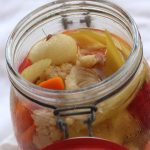
 Homemade ricotta had been on my “to do” list for awhile. Not a big deal: three ingredients and maybe 10 minutes of active attention. So I can’t explain why I didn’t get around to it. But one fine afternoon…ricotta making rose to the top of the list.
 So my personal answer to “Worth the trouble to make ricotta at home?” is no–although I do want to try goat milk one more time–because I have a good source of freshly made ricotta. If your only choice is a supermarket brand, bland tasting and laced with stabilizers, give homemade ricotta a try. I suggest you do it in small batches (say, two cups of milk) until you get the results you’re going for. Then ramp up to as much as 1 gallon of milk at a time.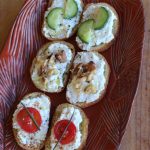
 Reading an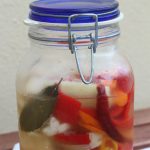
 Corner of Vermont is a store that sells maple syrup, maple sugar and maple candies. Also, the state’s maple-flavored creemees, which look like soft-serve ice cream but have more butterfat and therefore taste better.
 Just then a stream of middle-schoolers charged into the store, demanding creemees and other after-school treats. I stopped asking questions and left.